
Remember the days when your solution to a faulty Nintendo cartridge was simply blowing on it? That was our makeshift IT support system.
Cartridge not loading? Blow gently. Still no luck? Blow harder.
If all else failed, a firm smack on the console did the trick.
Back then, we thought we had technology figured out.
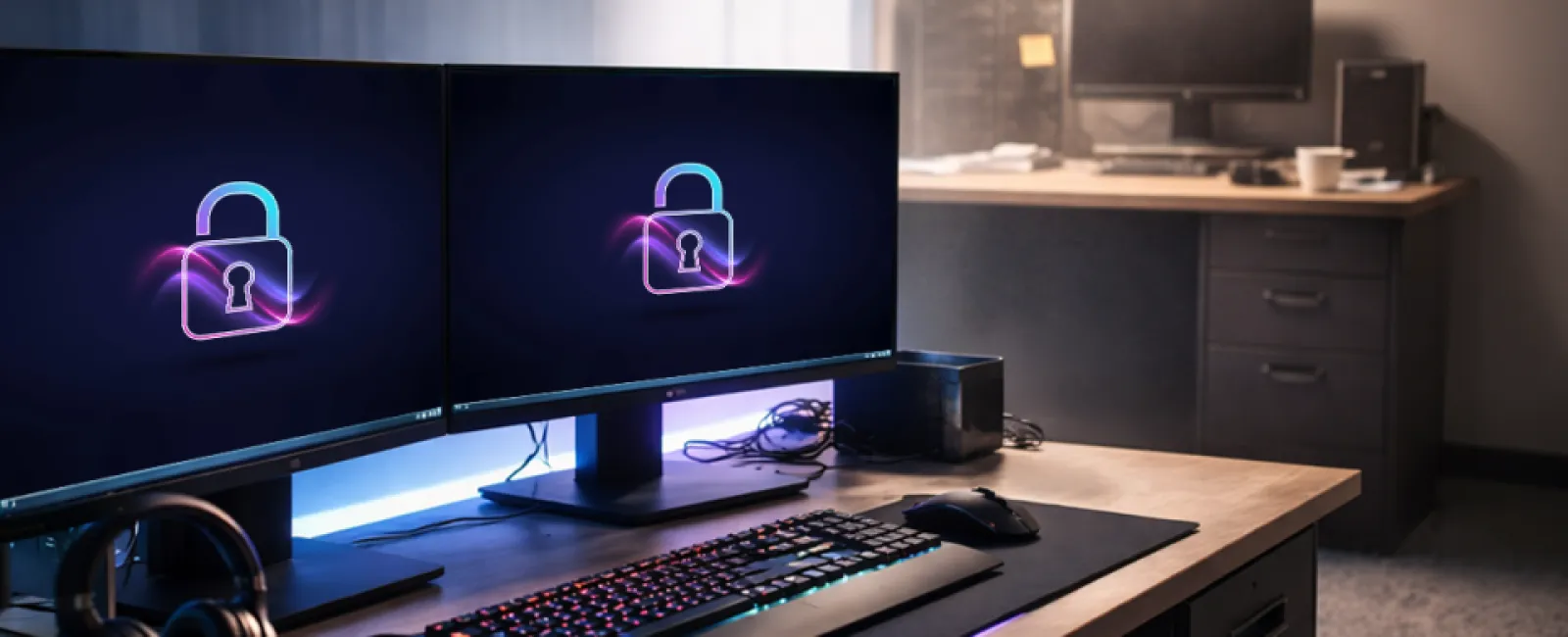
But your child's gaming setup today is leagues ahead: equipped with a solid-state drive, 32GB RAM, a processor capable of rendering short films, mesh Wi-Fi eliminating dead zones, live performance tracking, and multi-factor authentication on every account.
Everything's finely tuned. Enhanced. Maintained.
Now, consider your office environment.
There's a 2019 workstation that drags through a four-minute boot time, a printer jamming every Tuesday like clockwork, shared folders confusingly labeled "New New Final FINAL," incompatible software systems, Wi-Fi dropping in the conference room, and laptops forcing ignored "Restart to update" prompts for weeks.
Gamers optimize. Businesses settle.
And that gap is costing more than you realize.
Why Gamers Have the Edge in Tech Management
This isn't about budgets. A quality gaming PC can cost about the same as a business workstation. Business internet is often faster than home connections. Monitoring and security tools aren't prohibitively priced.
The real difference? Focus and care.
Gamers eagerly update everything: operating systems, graphics drivers, firmware, game patches. They do it immediately because outdated software causes lag — and lag means defeat. Your child might install a late-night update on a school night simply because they can't wait.
Meanwhile, every update delayed on your office laptops invites vulnerability. Developers have already fixed the issues, but your business hasn't installed the patches yet.
Gamers religiously back up their game saves. Lose a 200-hour save once, and they never repeat that error. Nationwide Insurance reports nearly 68% of small businesses lack a formal disaster recovery plan. When gamers lose data, it's lost progress in a game. When your business loses data, you risk client files, financial records, and operational continuity.
Gamers vigilantly track performance metrics — CPU temps, frame rates, network latency, disk usage — spotting even slight drops and fixing issues before they escalate. Most businesses only realize problems when someone complains, "The internet's slow today." That's reactive — not proactive — monitoring.
Your child wouldn't tolerate such neglect, yet their setup isn't supporting anyone's paychecks.
How Inefficient Business Tech Happens
No one intentionally builds a chaotic office network.
Business tech evolves organically. A new tool addresses one challenge. Then a platform for accounting arrives. Next CRM software. Then file sharing. Payroll systems. Security layers.
Initially functional, over time this tech isn't designed but accumulated — and accumulation breeds friction.
Gaming rigs are crafted purposefully for peak performance, while business technology often grows for convenience. One is strategy; the other is happenstance. And accidental systems eventually become costly systems.
Back in the cartridge days, we lacked better knowledge. Your business, however, has no excuse. The tools and expertise exist. The question is whether anyone's paying close attention.
The Hidden Costs of Inefficiency
The biggest expense isn't headline outages. It's the daily inefficiencies everyone accepts.
Five minutes wasted on slow logins. Three minutes hunting for misplaced files. Manually entering data into unsynced systems. Rebooting the same machine multiple times a week. Creating workaround processes because "it's just how things are."
Individually minor, but UC Irvine's study shows it takes approximately 23 minutes to regain focus after any interruption. Those short tech delays cost closer to half an hour in lost productivity.
Multiply that by your team, five days a week, 52 weeks a year. That adds up to thousands of lost work hours concealed in plain sight.
In gaming, lag is intolerable. In business, lag is accepted. And "acceptable" is the riskiest word in IT.
A More Meaningful Question
When asked, most business owners respond that their technology "works fine."
But "working" is not synonymous with "working efficiently."
Are your tools truly integrated or just coexisting? Are your systems streamlined or just layered on top of each other? Is your technology supporting your workflows or forcing you to work around it? Is anyone monitoring your network zealously like a gamer scrutinizes their frame rate — constantly and proactively, before issues arise?
Hardware cycles in and out, but software, automation, security measures, and workflow design fuel real productivity and profits. None of these improve on their own.
Quick Technology Checkup
Before you move on, ask yourself:
· When was your oldest office computer purchased?
· Did your backups complete successfully last week?
· Is there any device on your network with an ignored update pending for more than a week?
· Could you tell me your office internet speed off the top of your head?
Your child could answer all of these questions instantly about their gaming rig.
If you can't confidently answer them for your business systems, it's not failure — it's a sign of inattention. And that's something we can help fix.
How We Help
We guide businesses in replacing tech clutter with purposeful optimization. We take a step back to evaluate your entire technology landscape — identifying redundancy, outdated systems, bottlenecks, and opportunities for simplification or automation.
Our focus isn't on adding more technology, but on improving the technology you already use.
If you want to assess how your current systems and processes are impacting productivity and profitability — or uncover hidden costs — let's talk.
No technical jargon. No pressure. No gamer analogies needed.
Click here or give us a call at 303-415-2702 to schedule your free 15-Minute Discovery Call.
If this message resonates, feel free to share it with a business owner frustrated by tech lag.
Performance matters in business just as much as it does in gaming.


