
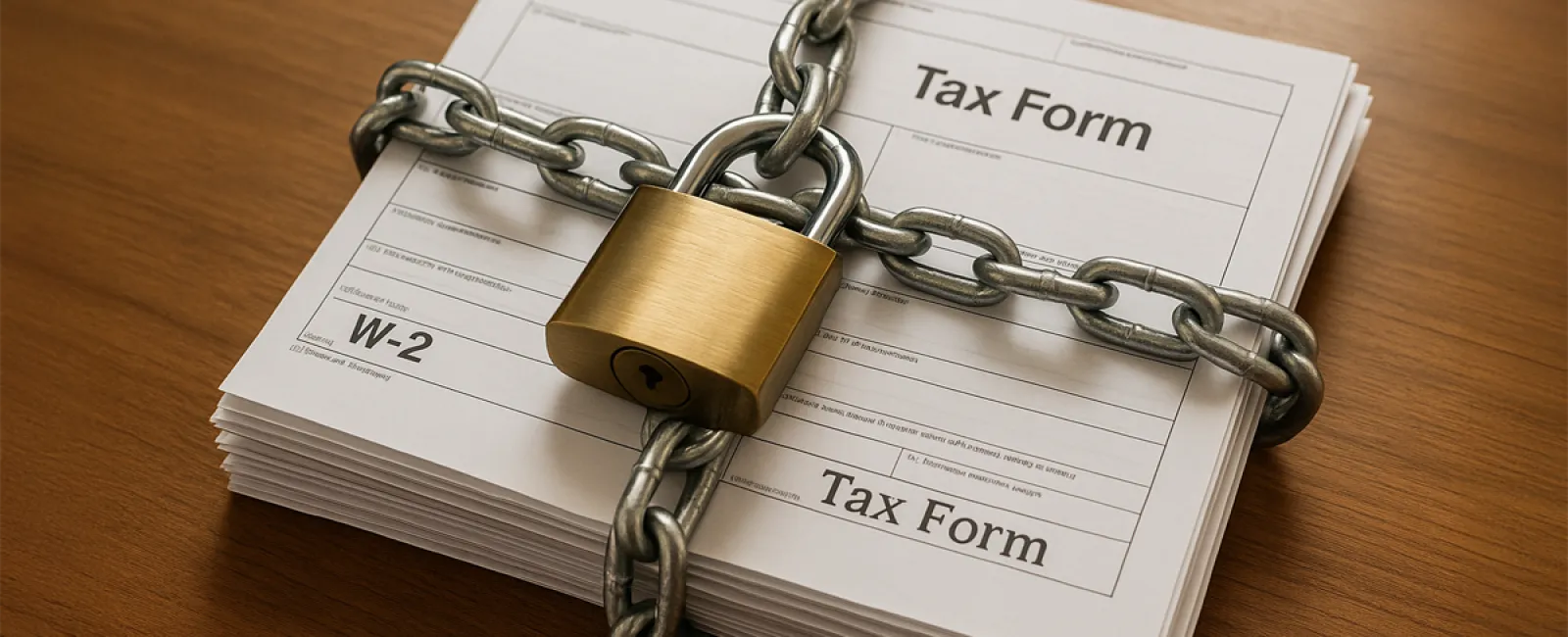
February marks the peak of tax season. Accountants are swamped, bookkeepers are scrambling to gather documents, and everyone is laser-focused on W-2s, 1099s, and looming deadlines.
But the real tax season headache rarely comes from paperwork—it comes in the form of a cunning scam.
One particularly dangerous scam surfaces early—well before April—because it's simple, convincing, and targeted directly at small businesses. You might already have one sitting unopened in an employee's inbox.
Understanding the W-2 Scam
Here's how it unfolds:
An employee responsible for payroll or HR receives an email that appears to come from the CEO, owner, or a top executive.
The message is brief, urgent, and convincing:
"Hi, I urgently need copies of all employee W-2 forms for a meeting with the accountant. Please send them ASAP—I'm tied up today."
The message sounds legitimate, the tone fits, and the request seems entirely reasonable during this busy season.
The employee complies and sends the W-2 forms.
But the email was never from the CEO. Instead, a cybercriminal spoofed the address or used a deceptive domain.
Now, the scammer has access to sensitive employee data:
• Complete legal names
• Social Security numbers
• Home addresses
• Salary details
Information criminals exploit to commit identity theft and file fraudulent tax returns before your employees even do.
Consequences of the Scam
Victims usually discover the scam when:
An employee files their tax return only to have it rejected due to an "already filed" status for their Social Security number.
Someone else has filed and received the refund in their name.
From that point forward, your employee faces months of dealing with the IRS, credit monitoring services, identity theft protection, and extensive paperwork—all caused by a phishing email they never suspected.
Imagine this happening across your entire payroll—and then explaining to your staff how their confidential info was compromised due to one deceptive email.
This isn't just a security breach—it's a breach of trust, a major HR crisis, a legal risk, and a blow to your company's reputation.
Why the W-2 Scam Is So Effective
This scam doesn't come with obvious red flags like those infamous Nigerian prince emails.
Its success lies in:
The perfect timing—W-2 requests are routine in February, raising no suspicion.
A plausible request—not demands for wire transfers or gift cards, but legitimate tax season documents.
A believable sense of urgency—"I'm slammed, can you send these quickly?" is typical in busy offices.
A credible sender—the scammer researches the company, mimics real executive names, and uses look-alike email domains.
Employees eager to assist their boss often bypass verification and act swiftly.
Protecting Your Business Before the Scam Hits
The good news? This scam is entirely preventable with solid policies and a vigilant culture—not just with fancy tech.
Implement a strict "no W-2s via email" policy—no exceptions. Sensitive payroll documents never leave your company through email attachments. If requested by email, the answer is a firm "no," even if the sender appears to be the CEO.
Require verification of sensitive requests through a separate communication channel—phone call, face-to-face, or internal chat—using contact info you already have, not info provided in the suspicious email. A 30-second call can prevent months of damage.
Hold a quick, 10-minute tax scam awareness meeting with payroll and HR staff immediately. The sooner the better. Explain what scams look like and the procedures to follow. Awareness is your cheapest and most effective insurance.
Secure payroll and HR systems with multi-factor authentication (MFA). MFA acts as a final barrier if credentials are compromised.
Foster a workplace culture where verifying requests is encouraged and praised. Employees who double-check suspicious orders should be recognized, not reprimanded. When your team feels empowered to question, scammers have nowhere to hide.
Just five straightforward rules: simple to roll out this week and powerful enough to block the initial waves of these scams.
Looking at the Larger Threat Landscape
The W-2 scam is just the beginning of a rising tide of tax season fraud:
• Fake IRS notices demanding immediate payments
• Phishing scams disguised as tax software updates
• Spoofed emails appearing to come from your accountant with malicious links
• Fraudulent invoices designed to resemble legitimate tax expenses
Criminals exploit tax season distractions and rapid financial transactions as opportunities.
Companies that get through tax season unscathed aren't lucky—they're prepared.
They establish policies, provide training, and implement systems that intercept suspicious requests before they escalate into disasters.
Is Your Business Protected?
If you already have solid policies and a well-trained team, you're ahead of many small businesses.
If not, now is the critical moment to act—don't wait for the first scam to hit.
For a comprehensive review, schedule a 15-minute Tax Season Security Check.
We'll assess:
• Payroll and HR system access along with MFA
• Your current W-2 verification procedures
• Email defenses to intercept spoofed messages
• The crucial policy update many businesses overlook
If this doesn't apply to your company, consider sharing this with a fellow business owner—it could save them from a costly security breach.
Click here or give us a call at 303-415-2702 to schedule your free 15-Minute Discovery Call.
Because tax season is stressful enough without adding the burden of identity theft.


